
Kompetenzzentrum Resiliente Stadt


Center for Resilient Cities
The Center for Resilient Cities is located at the Department of Architecture at TU Darmstadt. It involves four institutes: Design and Urban Development (EST), Urban Design and Planning (UDP), Design, Landscape Architecture and Urban Ecology (ELS), and Design and Urbanism (EUS). It was established in November 2025.


Center for Resilient Cities - Why and for what purpose?
The Center for Resilient Cities in the Department of Architecture highlights the specific contribution of architecture, urban design, and landscape architecture to urban resilience, bringing together various elements of resilient adaptation into integrated spatial concepts. Architectural and landscape design serve as research-based strategies for developing solutions that also consider emotional aspects, offering—for example—feelings of security in response to fears of disasters.


Resilience: A Key Issue for Cities


The question of resilience has become an important topic for cities for some time now. Climate change, the pandemic, terrorist attacks, and the war in Europe pose new challenges for our cities and their development.
According to UN-Habitat, urban resilience refers to “the measurable ability of any urban system, together with its inhabitants, to maintain continuity despite shocks and stresses, while positively adapting and transforming toward sustainability.” Nevertheless, resilience is not a clearly defined term. It must always be related to a specific hazard, crisis, or risk, each requiring different adaptation strategies and transformations.
Resilience is multidimensional. The technical dimension often takes center stage—for example, when examining critical infrastructure. But even when addressing the function and crisis-proofing of water supply and wastewater systems, transportation, energy, or information infrastructures, societal discourse and negotiation among diverse urban stakeholders are always needed. Resilience is therefore not only technically but also socially constructed. Public acceptance of measures—for example, climate adaptation—grows when such measures also enhance the attractiveness of urban spaces and thus improve quality of life.
In urban development, resilience means making cities more robust, more capable of learning, more adaptable, and more attractive. Since crises cannot be avoided entirely, the goal is to strengthen the ability to cope with them and emerge better prepared. This creates a connection to a sustainable, common-good-oriented, and future-proof city. In this sense, resilience is a core component of the current guiding principles of European urban development.
-
![]()
Designing Resilience in Asia, 2015. National University of Singapore -
![]()
Designing Resilience in Asia, 2016. National University of Singapore -
![]()
Designing Resilience in Asia, 2015. National University of Singapore -
![]()
Representatives of TUDa in the competition Designing Resilience in Asia 2015, Singapore -
![]()
10 Jahre Mundus Urbano -
![]()
Backstage Park, UDP -
![]()
PreHealth Project, UDP -
![]()
Redesign of the urban space in the Altgruna neighborhood center, Dresden. KOPPERROTH Architektur & Stadtumbau PartGmbB -
![]()
Visualization of the winning design for the new Old Leipzig Station district, KOPPERROTH Architektur & Stadtumbau PartGmbB


- Go to picture 1
- Go to picture 2
- Go to picture 3
- Go to picture 4
- Go to picture 5
- Go to picture 6
- Go to picture 7
- Go to picture 8
- Go to picture 9
Contact
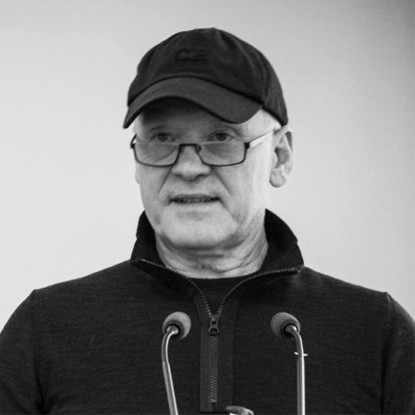
Prof. Dr.-Ing. Jörg Dettmar
Coordinator of the Competence Center for Resilient City
dettmar@freiraum.tu-...
work +49 (0) 6151 16-22160
fax +49 (0) 6151 16-22163
Work
L3 01 350
El-Lissitzky-Str. 1
64287
Darmstadt